When a tree problem becomes urgent
Emergency tree work begins with the hazard, not with cosmetic cleanup. A tree on a house, a heavy limb suspended over an entrance, a blocked driveway, a newly leaning trunk, or a failure near a road can require faster attention than ordinary maintenance. When you call, the most helpful description is what failed, what it is touching or threatening, whether people can safely stay away from the area, and whether electrical lines are involved.
If electrical conductors are down, tangled in a tree, or close enough that the situation is uncertain, do not approach, touch, cut, drag, or move anything. Keep people away and contact the appropriate utility or emergency service. Tree contractors can address the tree component once the electrical hazard is controlled. If there is immediate danger to people, use the appropriate emergency service first.
How emergency tree work is handled
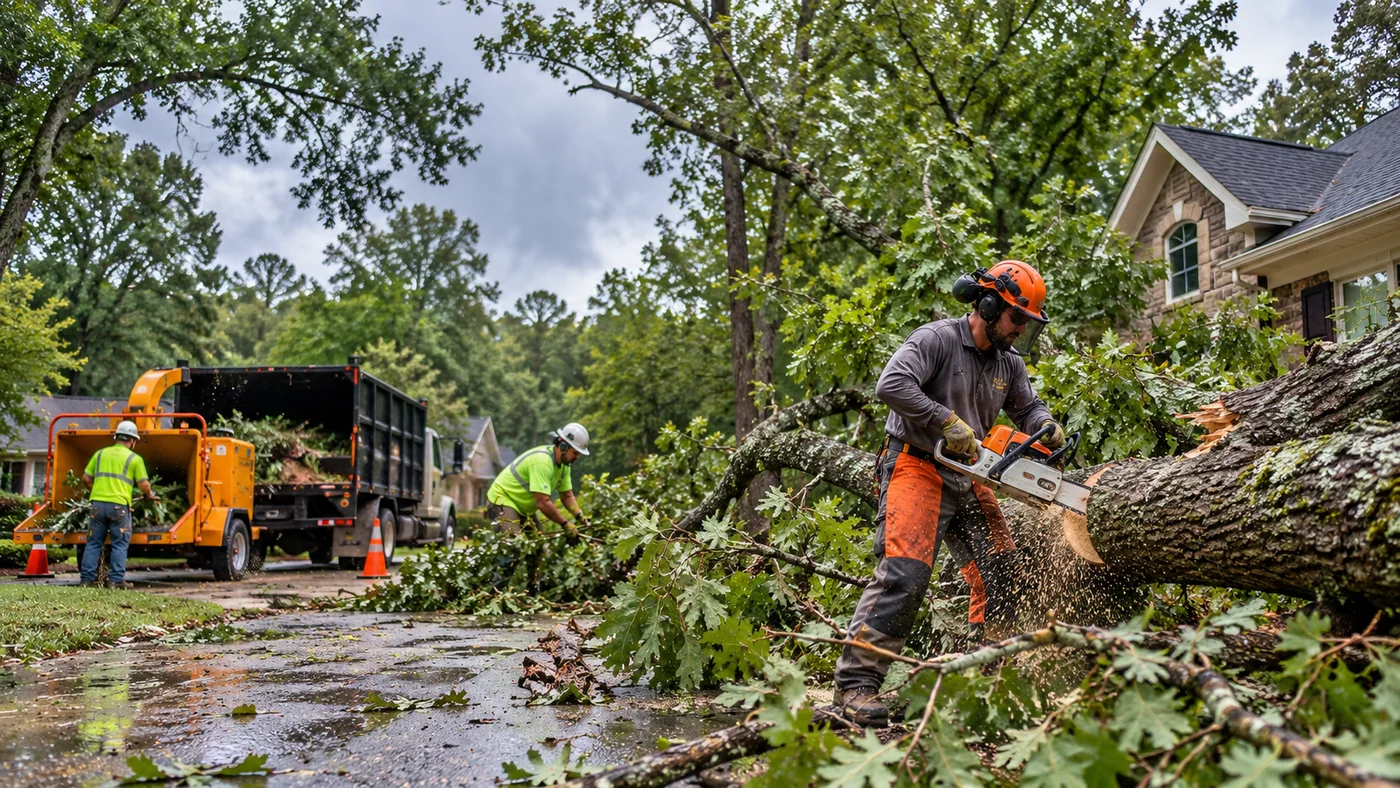
After severe weather, access can be the limiting factor. Streets may be congested, multiple properties may need service at once, yards may be saturated, and debris may block the normal equipment route. A contractor may first perform hazard reduction to make the property safe and return later for final cleanup or stump work. That staged approach can be more practical than trying to finish every non-urgent detail during the first response.
Photos taken from a safe location can help explain the situation, but they do not replace an inspection. The contractor needs to understand loading, break points, remaining attachments, roof contact, neighboring property, and how sections can be moved without causing additional damage. Do not climb onto a damaged roof or walk under hanging limbs just to get a better picture.
Storm conditions that can make South Fulton tree hazards worse
South Fulton receives substantial rainfall over the year, and Georgia storms can combine saturated soil with strong wind. UGA guidance notes that wet soil can reduce root anchorage and contribute to uprooting. That makes root-plate movement, fresh leaning, or soil lifting around the base important details after a storm even when the trunk has not snapped.
Storm damage also creates a second problem: rushed decisions. A dramatic-looking canopy can sometimes be pruned and retained, while a tree that still looks mostly upright may have serious root or trunk damage. The contractor should evaluate the remaining structure before deciding whether the safest path is pruning, support, staged removal, or full removal.
What affects emergency tree service cost
Emergency pricing varies widely because time, access, storm conditions, cranes or rigging, and immediate hazards can dominate the work. These figures are broad market planning guidance, not a quote or a fixed company rate. See the full South Fulton tree service cost guide for more context. The actual estimate depends on the tree, property, access, equipment, cleanup, and the exact work requested.
- Immediate risk to structures or access
- Tree or limb position and loading
- Electrical or road involvement
- Night, weekend, or storm-demand conditions
- Crane, lift, or complex rigging needs
- Debris volume and haul routes
- Whether work is hazard reduction or full cleanup
Two projects with similar-looking trees can price very differently when one has open truck access and the other sits behind a house with a narrow gate, fence, overhead utilities, soft ground, or a roof beneath the canopy. When comparing estimates, focus on whether each proposal includes the same work: debris hauling, stump work, rigging, restoration, traffic control, and any return visit should be clear rather than assumed.
Emergency work may come before final cleanup
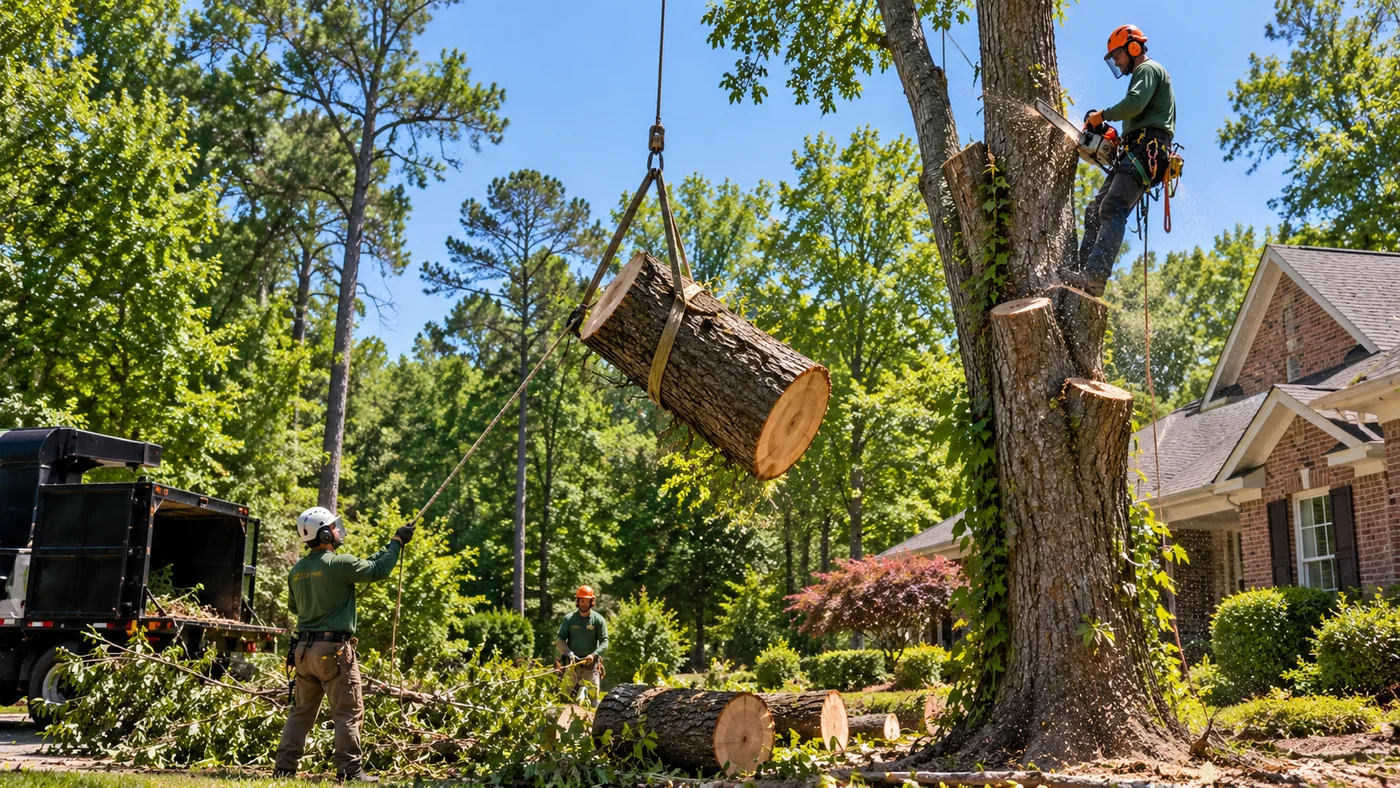
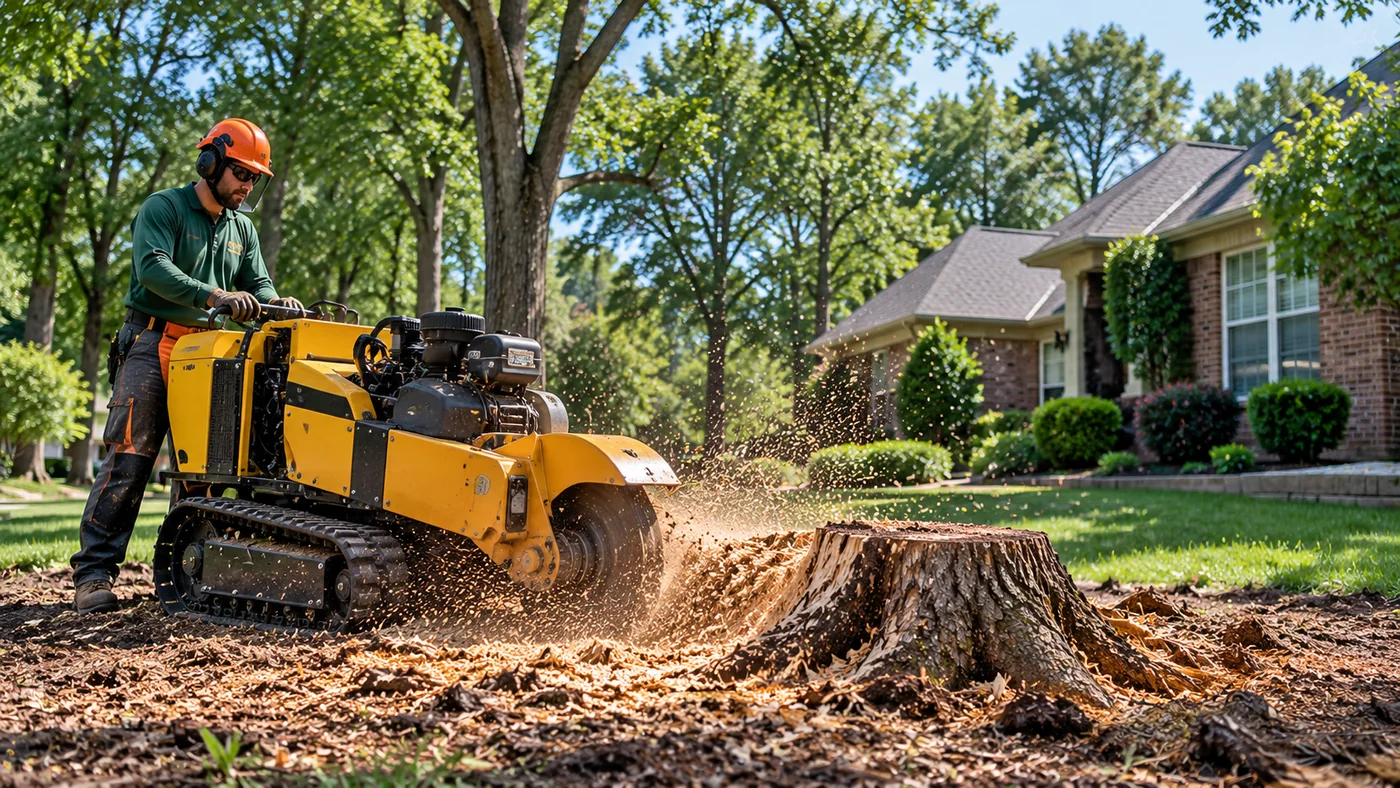
During a true emergency, the immediate objective may be to remove weight from a damaged structure, clear a driveway, eliminate a hanging limb, or stabilize access. That can leave logs, brush, stump work, or additional pruning for a later visit. Separating hazard reduction from final cleanup can be especially important after widespread storms, when crews and equipment are being allocated across many urgent calls. Ask what the initial response includes and what work, if any, would remain. That makes the schedule and invoice easier to understand when the job cannot be treated like ordinary planned maintenance.
Take photos only from a safe location
If it can be done from a safe location, take wide photos showing the tree, the surrounding property, and any damage before cleanup begins. Those images can help a contractor understand access and can also be useful when communicating with an insurer. Do not walk beneath suspended limbs, climb onto a roof, stand near a leaning tree, or enter an area with downed conductors for the sake of documentation. The scene can change quickly as broken wood shifts, wind continues, or saturated soil gives way. Personal safety matters more than a perfect photograph.
What to tell us during an emergency tree call
You do not need technical tree vocabulary. Tell us what you see and what you want the property to be like when the work is finished. Useful details include the number of trees or stumps, approximate size, whether branches or the trunk have already failed, what is nearby, whether trucks can reach the work area, and whether the concern feels urgent. The city and ZIP code help confirm travel and service coverage. If the condition involves a recent storm, construction work, new leaning, mushrooms, unusual leaf change, or repeated limb drop, mention that history too.
Photos from a safe location can be useful for context, but the final work may still need an on-site look. Do not climb, walk under hanging limbs, or approach electrical lines to take pictures. The goal is to give the contractor enough context to plan the next step without asking you to diagnose or measure a hazardous tree yourself.