Good pruning starts with a clear reason for the cut
Good pruning has a reason. The objective may be removing deadwood over a driveway, improving clearance from a roof, addressing crossed or damaged branches, reducing end weight on selected limbs, improving young-tree structure, or correcting specific storm damage. That is different from indiscriminately thinning a canopy or cutting every branch back to an arbitrary line. A useful estimate should identify what the pruning is meant to accomplish, because that objective determines which limbs should be considered and how much work is appropriate.
Mature trees around South Fulton homes often share space with roofs, fences, utility corridors, streets, patios, and neighboring yards. Clearance requests are common, but clearance alone should not become an excuse for large, damaging cuts. The goal is to create practical separation while retaining a balanced canopy and avoiding unnecessary wounds. Where utility conductors are involved, the safest course is to keep property owners away from the lines and let the appropriate utility or qualified contractor determine how the work should be handled.
How pruning is approached
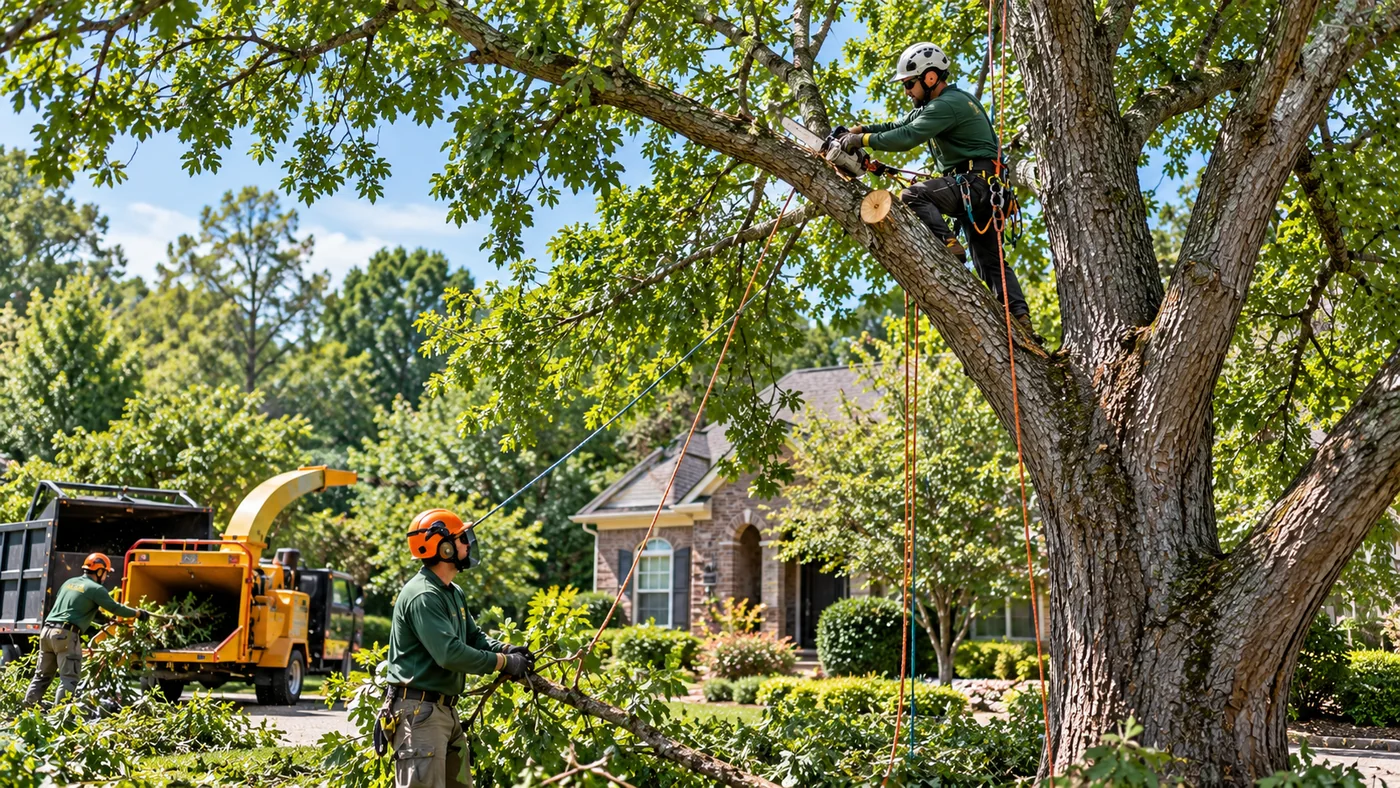
Pruning plans start with the tree's structure and the specific problem. Dead, broken, rubbing, weakly attached, or poorly oriented branches may be prioritized differently from healthy limbs that simply extend toward a roof. Young-tree structural pruning can focus on branch spacing and competing stems, while mature-tree work tends to be more conservative because large cuts remove more leaf area and create larger wounds. The type of pruning should fit the tree, not a generic percentage of canopy removal.
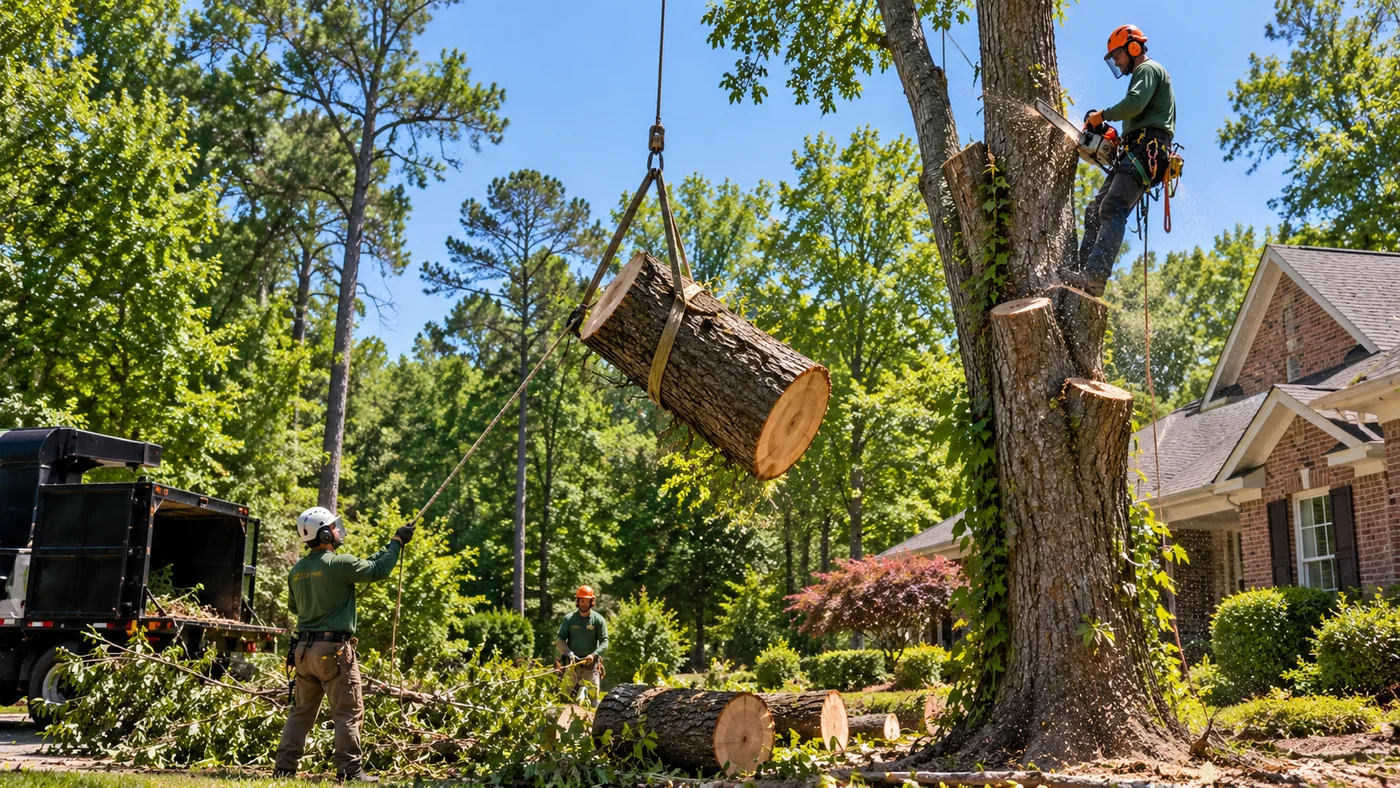
Access and debris handling matter here too. A small ornamental tree beside a front walk can be very different from a mature oak whose canopy stretches across a backyard with limited gate width. Climbing, aerial-lift access, rope systems, traffic exposure, roof protection, and brush hauling all affect how the crew approaches the property. When requesting an estimate, tell the contractor whether gates are narrow, the lawn stays soft, dogs need to be secured, or parking is limited.
South Fulton conditions that affect pruning decisions
Georgia pruning timing is not one-size-fits-all. UGA guidance generally favors dormant-season pruning for many structural objectives because branch architecture is easier to see and some stressors are reduced, but flowering trees and species-specific goals can shift timing. The practical rule for a homeowner is to describe the problem and the species if known rather than assuming every tree should be pruned in the same month.
South Fulton's warm, humid growing season encourages vigorous growth, while thunderstorms can expose weak attachments and dead limbs. That makes routine inspection useful before a branch becomes a cleanup problem. Pruning is especially worth discussing when limbs repeatedly contact roofing, hang over high-use areas, obscure sight lines, or show cracks and decay at unions. The answer may be a targeted cut, cabling, monitoring, or no work at all depending on what an inspection shows.
What affects tree trimming and pruning cost
regional trimming commonly lands around $270 to $1,800, with canopy size, access, height, and work objectives driving the range. These figures are broad market planning guidance, not a quote or a fixed company rate. See the full South Fulton tree service cost guide for more context. The actual estimate depends on the tree, property, access, equipment, cleanup, and the exact work requested.
- Tree height and canopy spread
- Number and diameter of branches
- Climbing or aerial-lift access
- Clearance from structures and utilities
- Amount of brush to haul
- Structural versus simple clearance objectives
- Traffic or pedestrian control needs
Two projects with similar-looking trees can price very differently when one has open truck access and the other sits behind a house with a narrow gate, fence, overhead utilities, soft ground, or a roof beneath the canopy. When comparing estimates, focus on whether each proposal includes the same work: debris hauling, stump work, rigging, restoration, traffic control, and any return visit should be clear rather than assumed.
What careful pruning avoids
Useful pruning is selective. Removing too much live foliage can stress the tree, encourage undesirable regrowth, and change branch loading. Large flush cuts damage the branch collar, while leaving long stubs creates other problems. Topping, lion-tailing, and arbitrary percentage reductions are not substitutes for deciding which branches actually need attention. When comparing estimates, ask the contractor to describe the pruning objective in plain language. 'Clear the roof while retaining balanced structure' is more informative than 'trim the whole tree,' and it gives you a better way to judge whether the completed work matches what was agreed.
Young and mature trees need different pruning
Young-tree pruning can often improve future structure with relatively small cuts. Competing leaders, poorly spaced branches, and low temporary limbs can be managed before they become large structural features. Mature trees usually call for more restraint. Large limbs contain substantial stored energy and create bigger wounds when removed, so pruning should focus on a clear benefit such as deadwood, clearance, defect reduction, or specific canopy management. Treating every tree on a property with the same pruning prescription ignores age, species, architecture, and the reason the work is being requested.
What to tell us about the pruning job
You do not need technical tree vocabulary. Tell us what you see and what you want the property to be like when the work is finished. Useful details include the number of trees or stumps, approximate size, whether branches or the trunk have already failed, what is nearby, whether trucks can reach the work area, and whether the concern feels urgent. The city and ZIP code help confirm travel and service coverage. If the condition involves a recent storm, construction work, new leaning, mushrooms, unusual leaf change, or repeated limb drop, mention that history too.
Photos from a safe location can be useful for context, but the final work may still need an on-site look. Do not climb, walk under hanging limbs, or approach electrical lines to take pictures. The goal is to give the contractor enough context to plan the next step without asking you to diagnose or measure a hazardous tree yourself.