When tree removal makes sense
A tree does not have to be completely dead before removal becomes a reasonable conversation. Severe structural defects, root damage, repeated limb failure, major storm damage, unsuitable placement, construction conflicts, or a level of decline that cannot be managed safely can all move a property owner toward removal. The useful first step is not guessing from the ground. It is describing what you are seeing, where the tree stands, and what would be affected if a large limb or the whole tree failed.
South Fulton properties range from compact neighborhoods near major corridors to larger wooded lots farther south and west. That changes the work. A tree in an open rear yard may allow straightforward equipment access. A similarly sized tree between a house, privacy fence, driveway, and neighboring property can require controlled piece-by-piece dismantling and more rigging. Tree size is only one part of the job. Access, nearby structures, tree condition, and cleanup can matter just as much.
How tree removal is handled
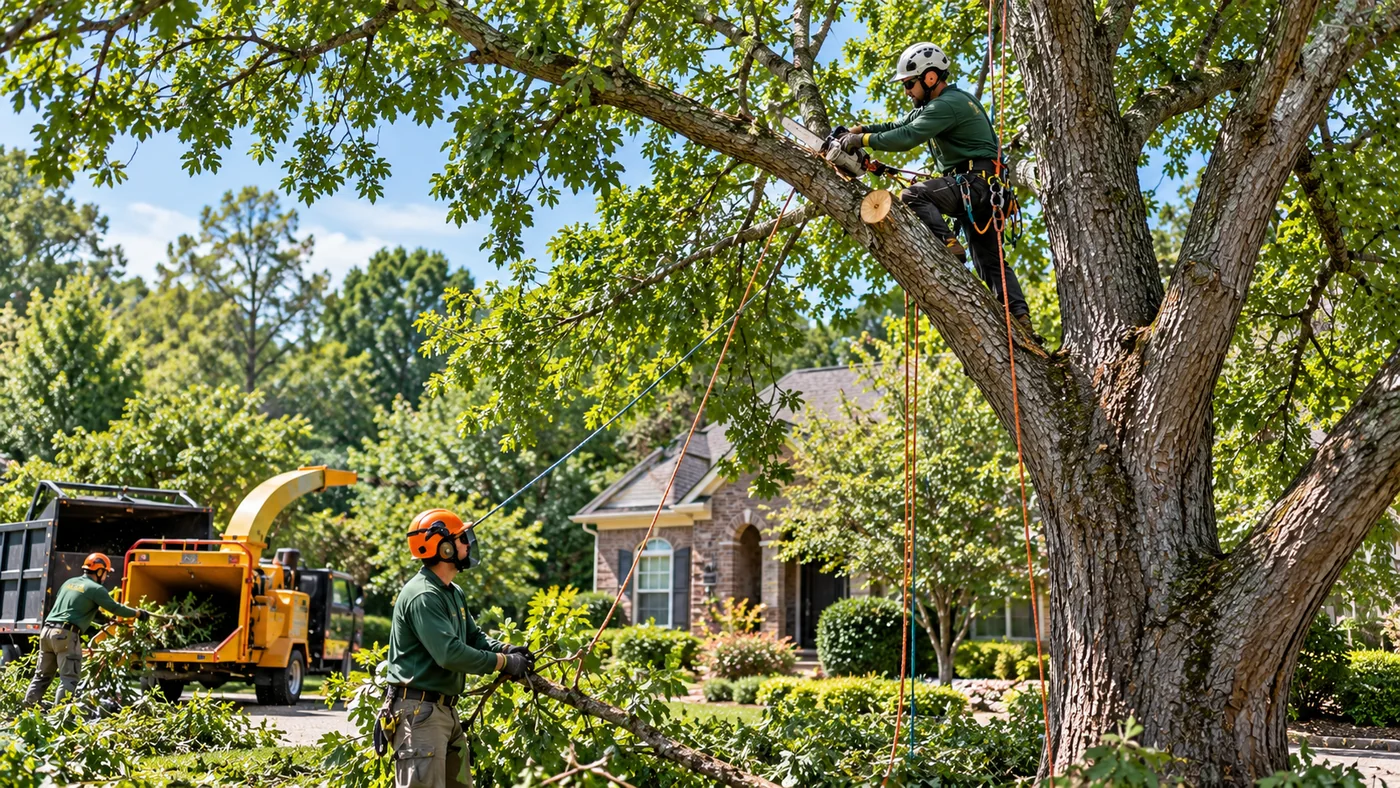
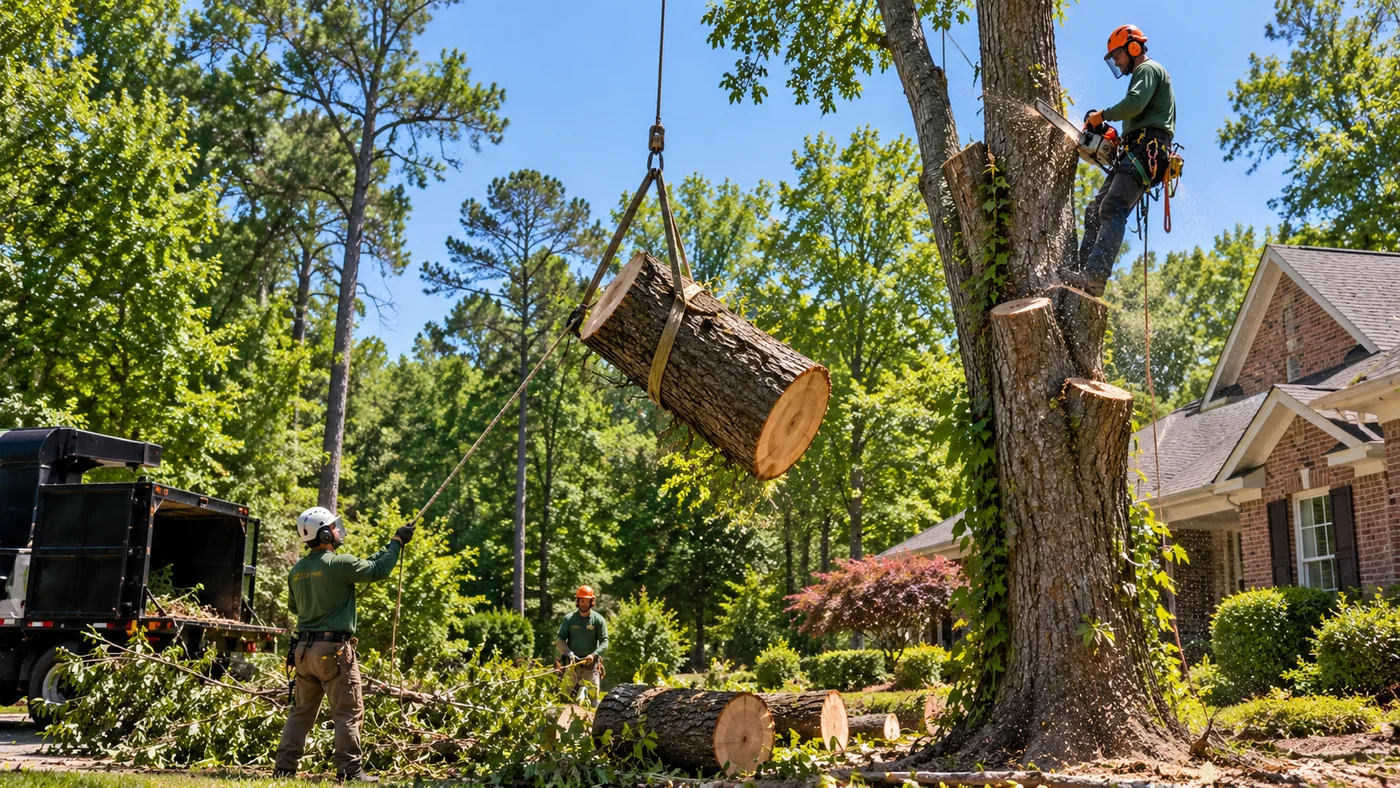
Removal plans are built around the drop zone, access, nearby targets, tree condition, and the amount of material that must be handled. Where open space is available, sections may be lowered or felled into a clear area. Around structures and tight boundaries, the work can be broken into smaller sections so limbs and trunk pieces are controlled before they reach the ground. The exact method belongs to the contractor who can see the property, but a caller can help by noting fences, sheds, pools, septic features, overhead utilities, narrow gates, steep grades, soft lawn areas, and parking constraints.
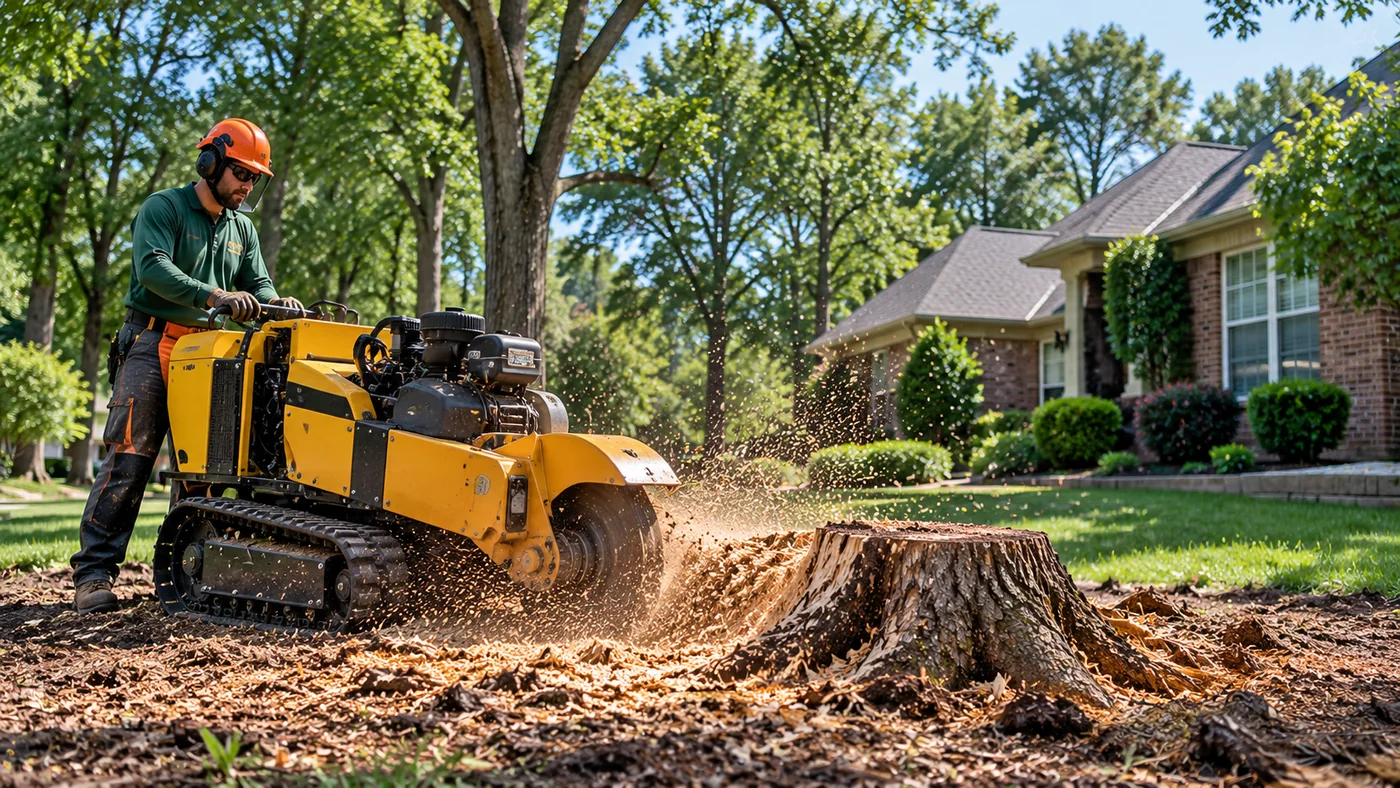
Cleanup is another real work choice. Some property owners want the trunk and brush hauled away, some want usable logs left in a designated place, and some want stump grinding bundled with the removal. Those decisions affect equipment time and disposal volume. Asking about them before an estimate makes the quote easier to compare and reduces the chance that two proposals are pricing different versions of the job.
South Fulton conditions that can make removal more complex
Georgia clay and construction disturbance matter because roots can be concentrated relatively near the soil surface. UGA guidance notes that a large share of roots in clay soils may occupy the upper 12 to 18 inches. Driveway work, grading, trenching, soil compaction, drainage changes, and new construction can therefore affect stability and vigor without creating an obvious trunk wound. On a South Fulton property where decline follows recent site work, that history is worth mentioning during the inspection.
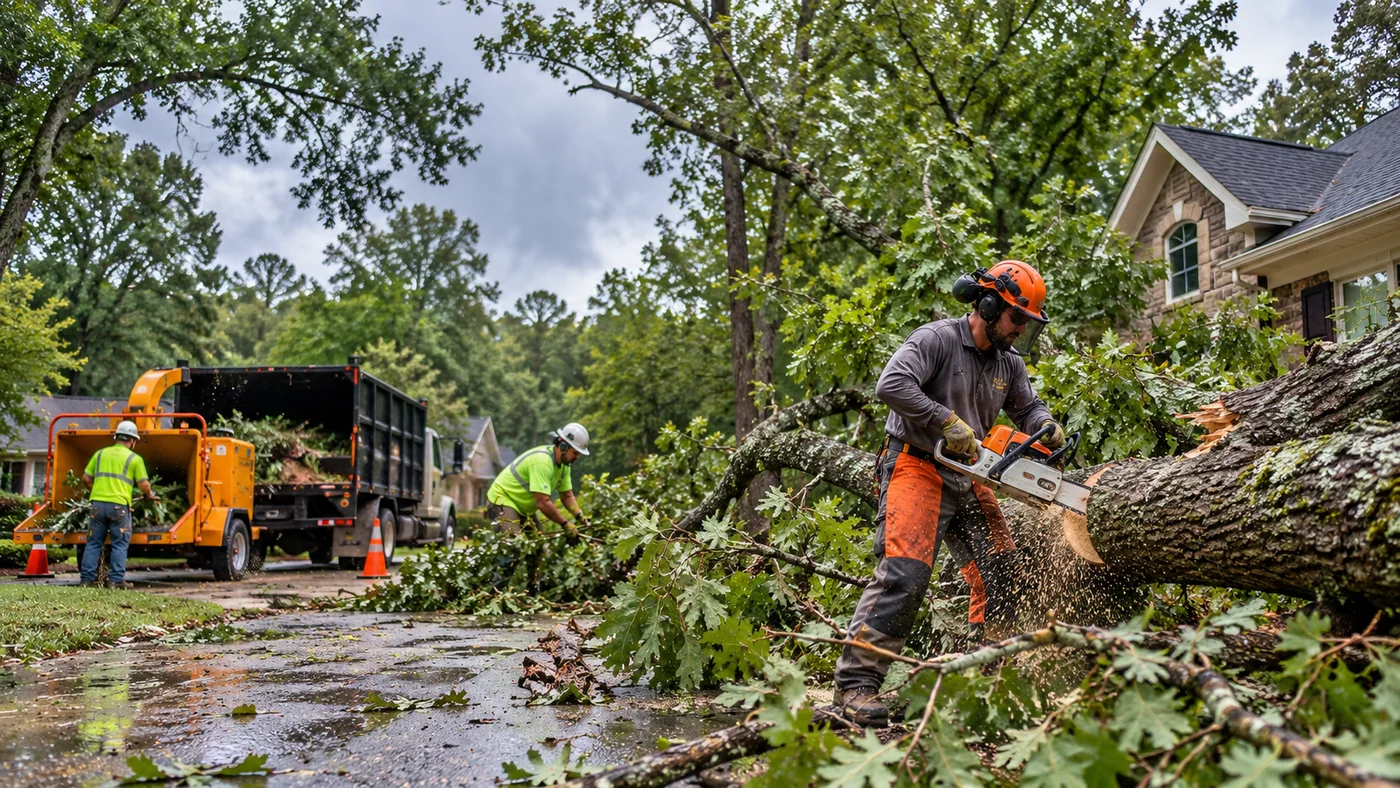
Storms are another common trigger. Saturated soil reduces the resistance available to roots, and strong wind can expose defects or destabilize a tree. A tree that suddenly leans, lifts soil at the root plate, drops a major scaffold limb, or changes noticeably after a storm deserves prompt professional assessment. That does not mean every storm-damaged tree should be removed, but it does mean the decision should be based on the remaining structure rather than appearance alone.
What affects tree removal cost
Many regional removals fall roughly between $200 and $2,000+, with difficult large trees sometimes costing more. These figures are broad market planning guidance, not a quote or a fixed company rate. See the full South Fulton tree service cost guide for more context. The actual estimate depends on the tree, property, access, equipment, cleanup, and the exact work requested.
- Tree height and trunk diameter
- Canopy spread and condition
- Access for trucks, loaders, or lifts
- Rigging around houses, fences, roads, and utilities
- Debris hauling and disposal volume
- Stump grinding or surface-root work
- Emergency timing and storm conditions
Two projects with similar-looking trees can price very differently when one has open truck access and the other sits behind a house with a narrow gate, fence, overhead utilities, soft ground, or a roof beneath the canopy. When comparing estimates, focus on whether each proposal includes the same work: debris hauling, stump work, rigging, restoration, traffic control, and any return visit should be clear rather than assumed.
Could pruning solve the problem instead?
Removal is not automatically the first answer when a tree creates concern. A damaged crown may be manageable with targeted pruning, a weak union may warrant a support discussion, and a tree with a limited defect may be monitored when the target area is low consequence. Removal becomes more compelling when defects are severe, the root system is compromised, decline is advanced, repeated failures continue, or the tree conflicts with a project that cannot reasonably be redesigned around it. Keeping these alternatives visible is useful because it prevents a sales conversation from substituting for an actual assessment.
Preparing the property for removal day
Before the crew arrives, move vehicles, patio furniture, toys, portable grills, and other items out of the planned work and haul routes. Unlock gates, identify septic or irrigation features if relevant, secure pets, and tell the contractor about private utilities or hidden landscape features. Neighbors may also need notice when access or temporary parking affects a shared boundary. Preparation does not require the homeowner to cut branches, climb the tree, or clear hazardous debris. The goal is simply to make the property easier to access and reduce avoidable conflicts once equipment is on the property.
What to tell us about the tree
You do not need technical tree vocabulary. Tell us what you see and what you want the property to be like when the work is finished. Useful details include the number of trees or stumps, approximate size, whether branches or the trunk have already failed, what is nearby, whether trucks can reach the work area, and whether the concern feels urgent. The city and ZIP code help confirm travel and service coverage. If the condition involves a recent storm, construction work, new leaning, mushrooms, unusual leaf change, or repeated limb drop, mention that history too.
Photos from a safe location can be useful for context, but the final work may still need an on-site look. Do not climb, walk under hanging limbs, or approach electrical lines to take pictures. The goal is to give the contractor enough context to plan the next step without asking you to diagnose or measure a hazardous tree yourself.