Dormant season is a strong default for structural work
For many deciduous trees, late dormant-season pruning makes it easier to see branch architecture before leaves obscure the crown. Structural issues such as competing leaders, crossing limbs, poorly spaced branches, and selected weak attachments can be evaluated more clearly. Young trees can especially benefit from early structural pruning because small cuts can guide future form without removing large limbs later.
Flowering trees can shift the schedule
If the goal is to preserve flowers, the tree's flowering habit matters. Some trees set buds on older wood and are best pruned after flowering, while others tolerate dormant pruning without sacrificing the desired display. A homeowner should not apply one calendar rule to every ornamental tree. If you know the species, include it with the estimate request; if not, photos of leaves, bark, form, and flowers can help with identification.
Storm damage and deadwood do not wait for a perfect month
Broken limbs, hanging branches, and dangerous deadwood are risk issues rather than seasonal aesthetic tasks. They can require attention whenever they occur. The same applies to clearance that creates an immediate conflict with a structure or route. Timing guidance should never become a reason to leave a dangerous condition over an occupied area for months simply because the tree is in active growth.
Avoid pruning without a defined objective
The calendar is less important than avoiding unnecessary cuts. 'Trim it because it has not been trimmed this year' is not a strong reason. Pruning should address structure, deadwood, clearance, storm damage, training, health, or another defined goal. Mature trees generally benefit from more conservative pruning because large cuts create large wounds and remove more leaf area. A contractor should be able to explain what will be removed and why.
Correct cuts matter as much as timing
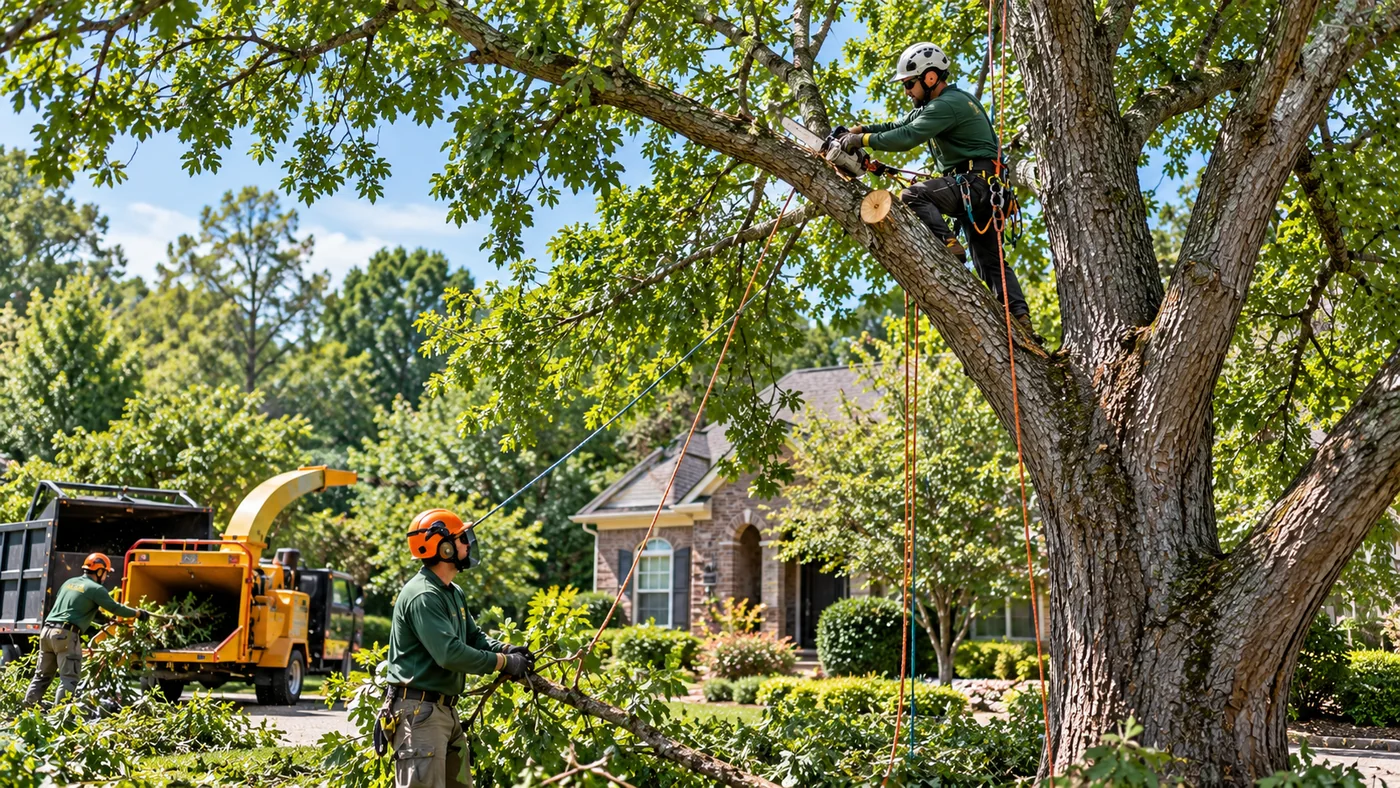
UGA guidance emphasizes proper pruning technique rather than coating routine cuts with wound paint. Cutting into the branch collar can damage the trunk's natural defense zone, while leaving long stubs is also undesirable. Large branches should be removed in a way that prevents bark tearing. Property owners do not need to perform the technique themselves, but they can ask whether the proposed pruning follows accepted branch-removal practices rather than topping or indiscriminate shearing.
South Fulton weather creates practical scheduling considerations
Wet ground can limit lift or truck access even when the tree's biology suggests a suitable pruning period. Summer heat can influence crew scheduling, while storms can create sudden priorities. For a backyard with soft clay, waiting for a drier access window may protect the lawn and reduce rutting. The ideal appointment therefore combines tree biology with safe equipment access and the urgency of the problem.
When timing needs an on-site judgment
Tree work is site-specific. Species, size, condition, soil, root history, access, nearby targets, jurisdiction, and the owner's goal can change the appropriate recommendation. A guide can help you recognize useful observations and understand the vocabulary, but it cannot establish that a tree is safe, diagnose a disease with certainty, or create a fixed quote for a property that has not been reviewed.
When you request an estimate, describe what you see in ordinary language. Include the service address, city and ZIP code, number of trees or stumps, rough size, nearby structures or utilities, access limitations, urgency, and any recent storm or construction history. If you have a permit, HOA requirement, site plan, or previous tree assessment, mention it so the contractor knows the administrative context too.