Begin with people, electrical lines, and access
If a tree or limb is on electrical conductors, near downed lines, or in a position where electrical contact is uncertain, keep people away and contact the utility or emergency service. Do not touch, cut, pull, or drag the tree. If a damaged tree blocks emergency access or creates immediate danger to people, use the appropriate emergency service. Tree cleanup begins only after those hazards are controlled. The first phone call to a tree contractor should describe what is affected and whether utilities or emergency responders are already involved.
Look for changes, not just broken branches
A tree can remain standing and still change substantially in a storm. Fresh leaning, lifted or cracked soil around the base, exposed roots, a newly opened trunk crack, split co-dominant stems, or a large branch torn from the trunk are useful observations. UGA storm guidance notes that saturated soils can contribute to uprooting. A tree that has always leaned is different from a tree that suddenly shifted and disturbed the root plate during a storm.
Hanging wood can move after the weather passes
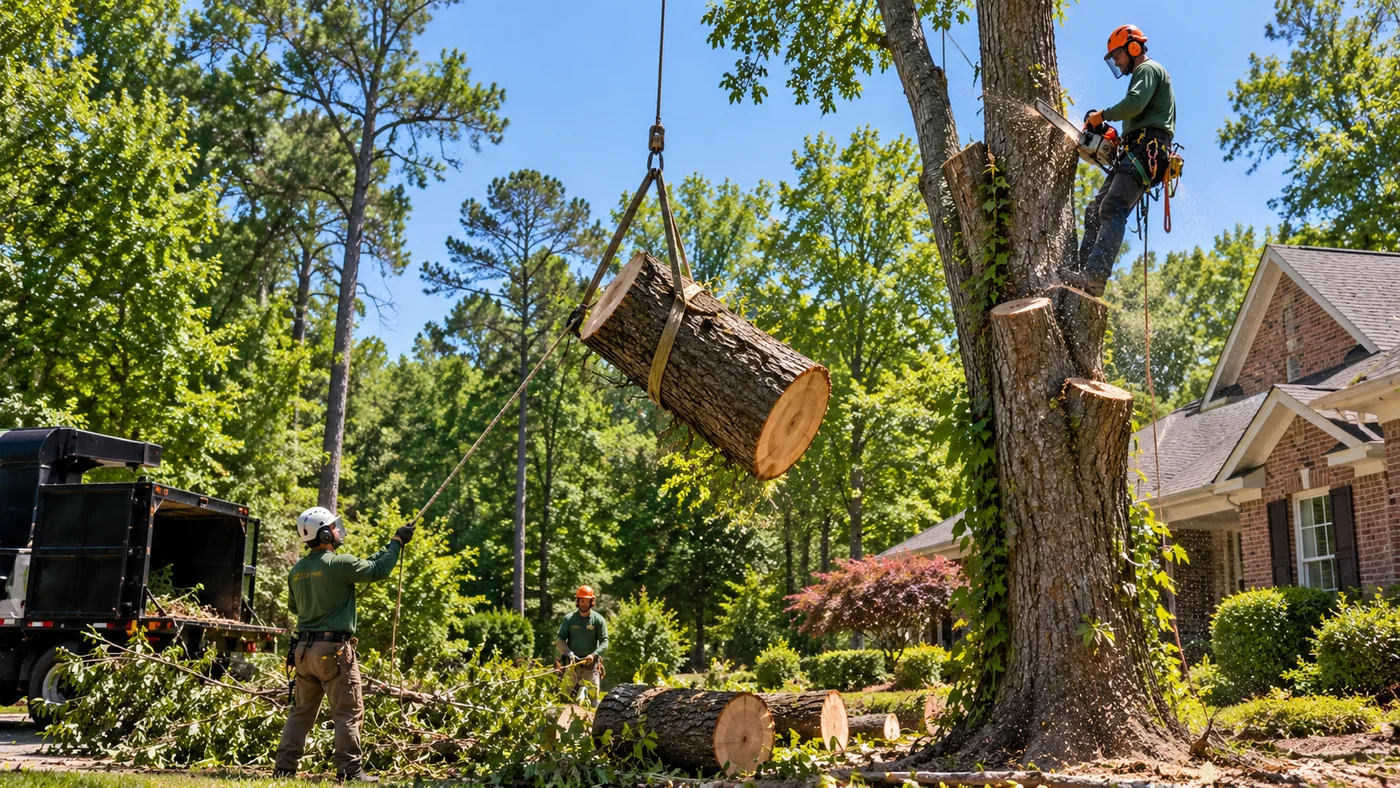
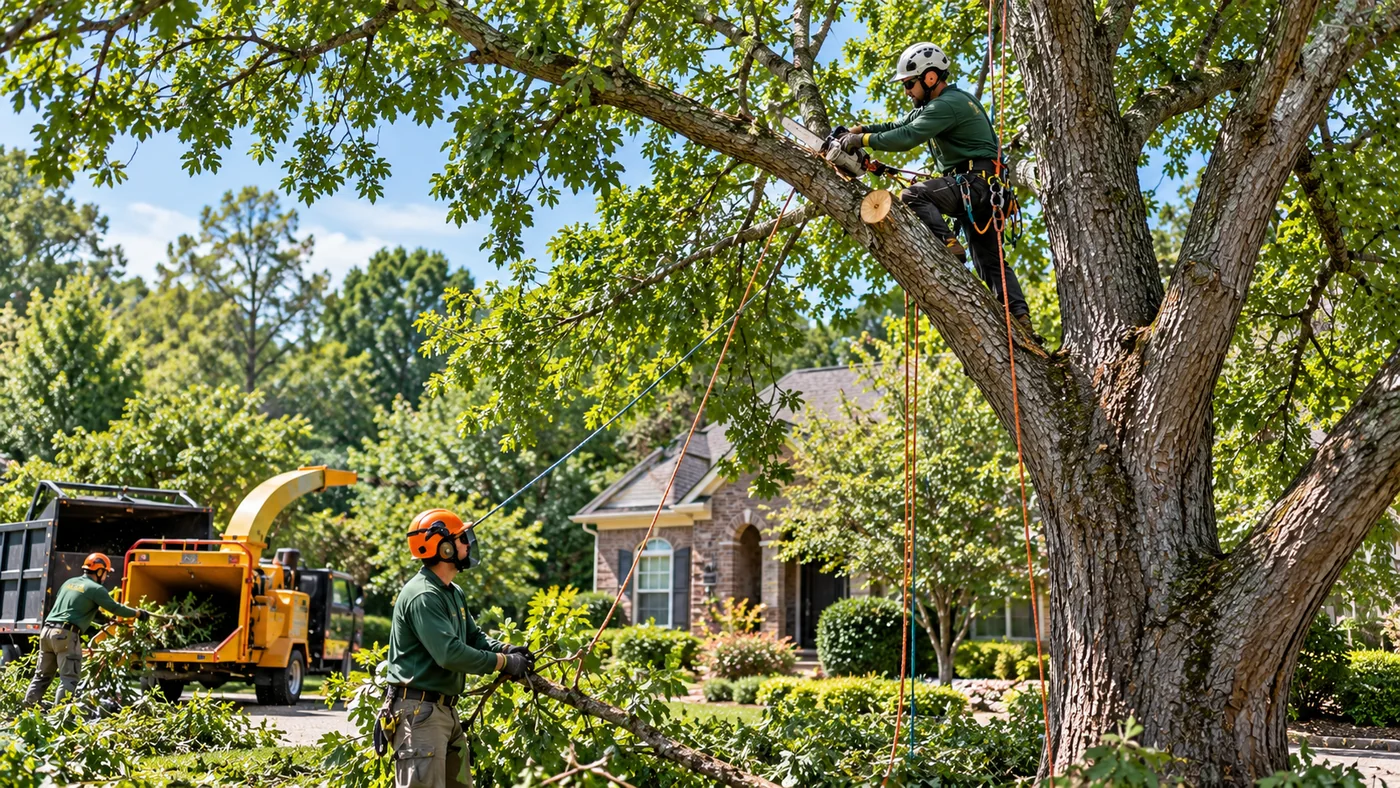
Broken limbs sometimes remain lodged in the canopy or suspended by strips of wood. Wind can drop them later, and branches under tension can move unpredictably when cut. Do not walk or park beneath suspended limbs because the storm has ended. A contractor may use climbing, lifts, ropes, or other controlled methods to remove pieces from outside the drop zone. Photos should be taken only from a safe position where nothing overhead appears unstable.
Not every damaged tree has to be removed
Storm damage can look dramatic without making the entire tree unsalvageable. A tree with a limited amount of branch loss may be a candidate for selective pruning. A valued mature tree with a specific weak union may warrant a support discussion. On the other hand, severe root movement, trunk failure, widespread structural damage, or extensive crown loss can make retention unrealistic. The remaining structure, not the emotional impact of the storm, should drive the decision.
Separate hazard reduction from final cleanup
During widespread storm demand, the first visit may focus on making the property safe or restoring access. Logs, brush, stump grinding, cosmetic pruning, or restoration can be scheduled later. Ask what is included in the emergency response and what work remains. This is especially important when a tree is on a structure, because moving the tree and repairing the building are separate jobs that may involve different companies and insurance documentation.
Document the scene without entering the hazard zone
Wide photos can help show the tree's position, property damage, and access for a contractor or insurer. Take them from stable ground outside the potential fall or drop zone. Do not climb onto a damaged roof, stand beside a shifting root plate, cross under hanging branches, or move close to downed conductors for a better angle. Your description of what happened and what the tree is touching is more valuable than a risky close-up.
When storm damage needs an on-site look
Tree work is site-specific. Species, size, condition, soil, root history, access, nearby targets, jurisdiction, and the owner's goal can change the appropriate recommendation. A guide can help you recognize useful observations and understand the vocabulary, but it cannot establish that a tree is safe, diagnose a disease with certainty, or create a fixed quote for a property that has not been reviewed.
When you request an estimate, describe what you see in ordinary language. Include the service address, city and ZIP code, number of trees or stumps, rough size, nearby structures or utilities, access limitations, urgency, and any recent storm or construction history. If you have a permit, HOA requirement, site plan, or previous tree assessment, mention it so the contractor knows the administrative context too.